Healthy Habits
Establishing daily routines is crucial for maintaining emotional wellbeing as it provides structure and stability in one’s life. Consistency in daily habits can help reduce stress, anxiety, and improve overall mental health. When it comes to creativity, healthy habits play a significant role in fostering inspiration and innovation.
Examples of Healthy Habits
- Regular exercise: Physical activity not only boosts mood but also enhances cognitive function, leading to improved creativity.
- Mindfulness practices: Engaging in activities like meditation or yoga can help reduce stress and increase focus, allowing for more creative thinking.
- Adequate sleep: Getting enough rest is essential for cognitive function and emotional stability, both of which are crucial for creativity.
- Healthy diet: Eating nutritious foods can contribute to overall wellbeing, impacting mood and cognitive abilities positively.
Impact on Emotional Health and Creativity
Emotional wellbeing and the role of creativity – Healthy habits can have a dual effect on emotional health and creativity. For instance, regular exercise not only reduces stress and anxiety, promoting emotional wellbeing but also stimulates the brain, leading to enhanced creative thinking. On the other hand, inadequate sleep or poor diet can negatively affect both emotional health and creativity, resulting in decreased productivity and increased negative emotions.
Emotional Wellbeing
Emotional wellbeing plays a crucial role in the ability to express creativity. When individuals are in a positive emotional state, they are more likely to tap into their creative potential and come up with innovative ideas.
Connection between Emotional Wellbeing and Creative Expression
Emotional stability is key in enhancing creative thinking. When individuals are emotionally balanced, they are better able to think outside the box, explore new perspectives, and generate unique solutions to problems. This emotional equilibrium allows for a freer flow of ideas and fosters a more creative mindset.
Role of Self-Care Practices in Nurturing Emotional Wellbeing
Self-care practices are essential in nurturing emotional wellbeing for fostering creativity. Engaging in activities such as meditation, exercise, journaling, or spending time in nature can help individuals manage stress, regulate their emotions, and maintain a positive mindset. By prioritizing self-care, individuals can create a conducive environment for creativity to flourish.
Healthy Aging
Aging is a natural process that everyone goes through, but it’s essential to maintain overall health and well-being as we grow older. Engaging in creative activities can play a significant role in promoting healthy aging by stimulating the mind, fostering emotional well-being, and enhancing overall quality of life.
Creativity has been shown to have numerous benefits in promoting cognitive function as individuals age. By participating in activities such as painting, writing, playing music, or engaging in crafts, older adults can keep their minds active, improve memory, and enhance problem-solving skills. This can help reduce the risk of cognitive decline and conditions like dementia.
To support healthy aging through creativity, individuals can incorporate creative pursuits into their daily routines. This can involve setting aside time each day for activities that inspire them, joining community art classes or workshops, or even exploring new hobbies or interests. By making creativity a priority, older adults can enjoy the mental, emotional, and social benefits that come with engaging in artistic endeavors.
Active Lifestyle: Emotional Wellbeing And The Role Of Creativity
Regular physical activity plays a crucial role in maintaining emotional wellbeing. Engaging in an active lifestyle has been shown to reduce stress, anxiety, and depression, while also boosting overall mood and self-esteem.
Physical Activities for Boosting Creativity and Mental Resilience
- Yoga: Combining physical postures, breathing techniques, and meditation, yoga can enhance creativity by promoting relaxation and mindfulness.
- Dance: Dancing not only improves physical fitness but also stimulates brain activity, creativity, and emotional expression.
- Hiking: Spending time in nature through hiking can clear the mind, reduce stress, and inspire new ideas and perspectives.
- Swimming: Swimming is a full-body workout that can improve cognitive function, focus, and mental resilience.
Positive Impact of Regular Exercise on Emotional Health and Creative Thinking
Regular exercise releases endorphins, the body’s natural mood elevators, which can help alleviate symptoms of anxiety and depression. Physical activity also improves blood flow to the brain, enhancing cognitive function and creativity. By incorporating exercise into daily routines, individuals can experience improved emotional wellbeing, increased mental resilience, and a greater capacity for creative thinking.
Cardiovascular Health

Cardiovascular health is crucial for overall well-being, as it directly impacts our physical and emotional state.
Connection Between Cardiovascular Health and Emotional Wellbeing
Research has shown a strong connection between cardiovascular health and emotional well-being. When our heart is healthy, it can pump blood efficiently, delivering oxygen and nutrients to the body, including the brain. This leads to improved cognitive function, mood regulation, and reduced stress levels, all of which contribute to better emotional well-being.
Creativity as a Form of Stress Relief for Heart Health
Creative pursuits such as art, music, writing, or even cooking can act as a powerful form of stress relief. Engaging in creative activities triggers the release of dopamine, a neurotransmitter associated with pleasure and reward. This can help reduce stress hormones like cortisol, lower blood pressure, and promote relaxation, all of which are beneficial for heart health.
Role of Creative Pursuits in Maintaining a Healthy Heart and Emotional Balance
- Creative activities can serve as a distraction from daily stressors, allowing individuals to focus on the present moment and unwind.
- Expressing emotions through art or music can be cathartic, helping individuals process and release pent-up feelings that may contribute to emotional turmoil.
- Engaging in creative hobbies can provide a sense of accomplishment and boost self-esteem, leading to a more positive outlook on life.
Healthy Recipes
When it comes to promoting emotional wellbeing, the food we eat plays a crucial role. Nutritious recipes can not only support our physical health but also have a positive impact on our mental and emotional state. Additionally, a balanced diet is known to enhance creativity and provide the necessary nutrients for our brain to function at its best.
Recipes for Emotional Wellbeing and Creativity
Below are some nutritious recipes that are known to promote emotional wellbeing and enhance creativity:
- Spinach and Berry Smoothie:
- Ingredients:
- Fresh spinach
- Mixed berries
- Greek yogurt
- Chia seeds
- Almond milk
- Instructions:
- Blend all ingredients until smooth.
- Enjoy this antioxidant-rich smoothie for a boost of energy and focus.
- Ingredients:
- Quinoa Salad with Avocado:
- Ingredients:
- Quinoa
- Avocado
- Cucumber
- Cherry tomatoes
- Feta cheese
- Lemon vinaigrette
- Instructions:
- Cook quinoa according to package instructions and let it cool.
- Combine quinoa with chopped avocado, cucumber, tomatoes, and feta cheese.
- Drizzle with lemon vinaigrette and toss to combine.
- Enjoy this refreshing salad for a nutritious meal.
- Ingredients:
Eating a variety of nutrient-dense foods can support both emotional health and creative inspiration.
Mental Resilience
Creativity plays a vital role in enhancing mental resilience, allowing individuals to navigate through challenges with greater strength and adaptability.
Stress Management through Creative Outlets
- Creative activities such as painting, writing, or playing music can serve as powerful outlets for stress relief, enabling individuals to express their emotions and thoughts in a constructive manner.
- Engaging in creative pursuits can shift focus away from stressors, promoting a sense of relaxation and mindfulness that contributes to overall mental well-being.
- Creating art or music triggers the release of endorphins, which are neurotransmitters associated with feelings of pleasure and reduced stress levels.
Building Resilience through Creative Practices
- Regular engagement in creative activities fosters problem-solving skills and encourages individuals to think outside the box, enhancing their ability to tackle challenges effectively.
- Experimenting with different forms of creativity helps individuals build confidence in their abilities and develop a positive outlook towards setbacks and failures.
- Collaborating with others on creative projects can strengthen social connections and provide a support system during difficult times, promoting resilience through shared experiences.
Immune Support
Emotional wellbeing plays a significant role in maintaining a healthy immune system. When we are stressed or anxious, our immune response can be weakened, making us more susceptible to illness. On the other hand, positive emotions and a sense of overall well-being can boost our immune function and help us fight off infections more effectively.
Creativity and Inflammation, Emotional wellbeing and the role of creativity
Creativity has been shown to have anti-inflammatory effects on the body. Engaging in creative activities such as painting, writing, or playing music can reduce levels of inflammatory markers in the blood, which in turn supports a strong immune system. By reducing inflammation, creativity helps the body maintain a state of balance and health.
- Painting or drawing: Expressing emotions through art can be a therapeutic way to reduce stress and inflammation.
- Writing: Keeping a journal or writing creatively can help process emotions and promote mental well-being, which in turn supports immune function.
- Playing music: Engaging in musical activities can reduce levels of cortisol, a stress hormone that can suppress the immune system.
Stress Relief
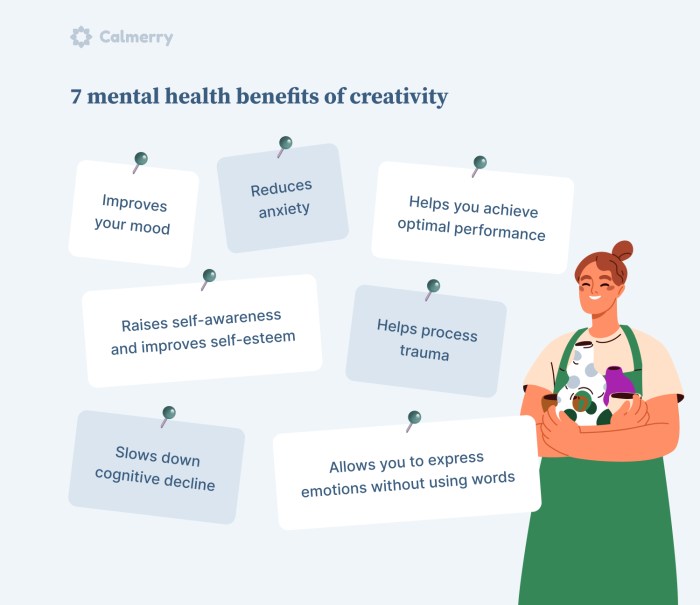
Creative expression can be a powerful tool for relieving stress. Engaging in artistic activities such as painting, writing, or crafting can provide an outlet for emotions and help individuals express themselves in a healthy way.
Physiological Effects of Creativity on Stress Levels
- Research has shown that participating in creative activities can lower cortisol levels, which is a hormone associated with stress.
- Engaging in creative expression can also trigger the release of dopamine, a neurotransmitter linked to pleasure and reward, leading to a sense of accomplishment and happiness.
- Creating art or music can activate the brain’s reward center, promoting relaxation and reducing feelings of anxiety.
Incorporating Creativity into Daily Routines
- Set aside time each day for a creative hobby you enjoy, whether it’s drawing, playing an instrument, or writing in a journal.
- Try mindfulness activities such as coloring or doodling to focus on the present moment and calm your mind.
- Experiment with different forms of creative expression to find what resonates with you and brings you the most joy.
Nutritional Balance
Maintaining a balanced diet is crucial for both emotional wellbeing and cognitive function. The food we consume directly impacts our mood, energy levels, and overall mental health. In addition, nutrition plays a significant role in supporting creative thinking and problem-solving abilities.
Impact of Nutrition on Cognitive Function and Creative Thinking
Nutrition has a direct impact on brain function and cognitive abilities. Essential nutrients such as omega-3 fatty acids, vitamins, and minerals play a key role in supporting brain health. These nutrients help improve memory, concentration, and overall cognitive function, which are essential for creativity and innovative thinking.
- Eat a variety of fruits, vegetables, whole grains, lean proteins, and healthy fats to ensure you are getting a wide range of nutrients that support brain function.
- Include foods rich in omega-3 fatty acids, such as salmon, flaxseeds, and walnuts, to support cognitive function and improve mood.
- Avoid processed foods, sugary drinks, and excessive caffeine, as these can negatively impact brain health and cognitive abilities.
- Stay hydrated by drinking plenty of water throughout the day, as dehydration can impair cognitive function and affect creative thinking.
- Consider consulting a nutritionist or dietitian to create a personalized meal plan that supports both emotional wellbeing and creativity.
FAQ Guide
How does creativity impact emotional wellbeing?
Creativity serves as a powerful outlet for emotions, allowing individuals to express themselves authentically and process their feelings positively.
What are some examples of creative practices that promote emotional health?
Engaging in activities like painting, writing, or playing music can have a therapeutic effect on emotional wellbeing by channeling emotions into artistic expression.
Can creativity be learned, or is it an innate skill?
While some people may have a natural inclination towards creativity, it is a skill that can be nurtured and developed through practice and exploration.
How does emotional wellbeing influence creative thinking?
A positive emotional state can enhance cognitive processes, leading to increased creativity, problem-solving abilities, and innovative thinking.


More Stories
Stress relief benefits of journaling: Enhancing Wellbeing Through Writing
Immune Support and Gut Health: Enhancing Overall Well-being
Techniques for improving emotional wellbeing: Enhance your mental health with these proven strategies